Data Architecture
CentriCare's data architecture is designed to support a multi-tenant structure with a two-tier hierarchy.
Hierarchy
Tier 1 - Organization
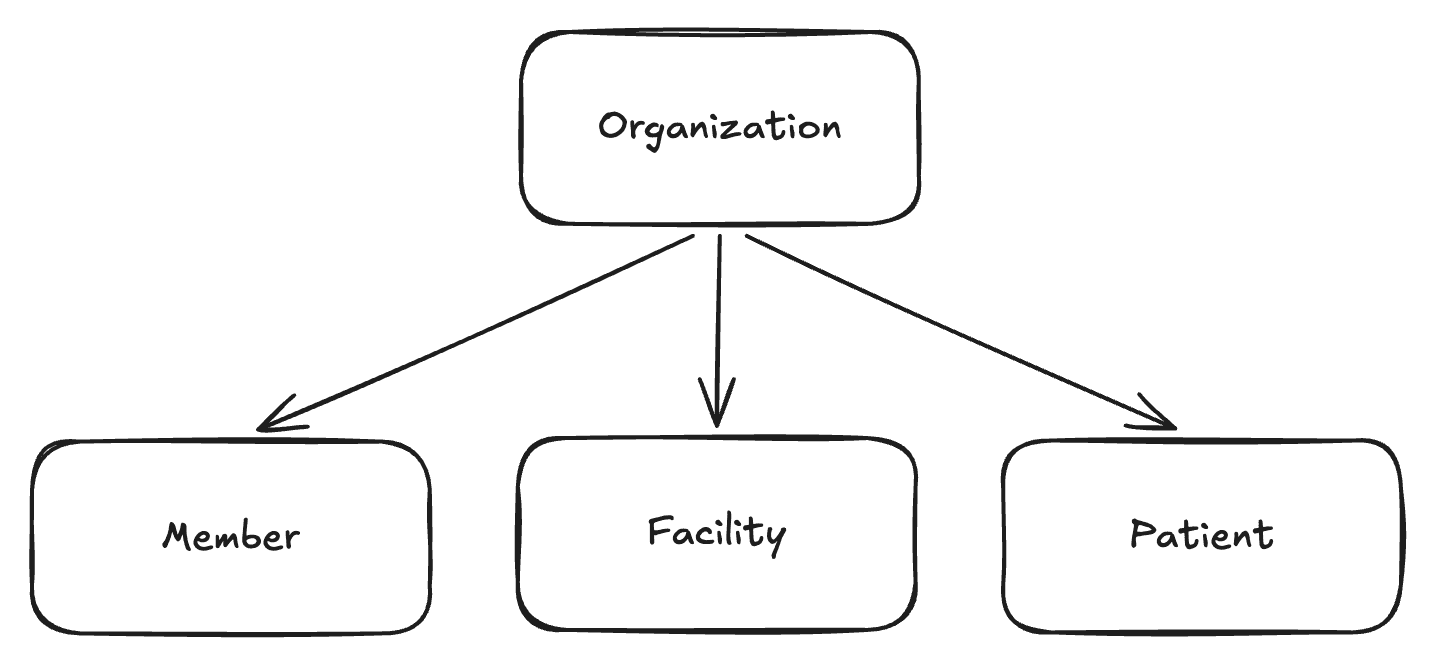 An organization represents the top-level tenant, encompassing *members, facilities, and patients. To access CentriCare services, every user account must either create or join an organization.
Member
A member is a user account belonging to an organization, assigned as an Owner, Admin, or Member. Each organization has exactly one owner (its creator). Admins are members with elevated permissions to manage organization resources.
Facility
A healthcare facility belongs to an organization (e.g., a healthcare group operating multiple hospitals).
Patient
A patient is an individual receiving care at a facility under an organization.
- Unified MRN: Medical Record Numbers (MRNs) are owned by the organization, enabling seamless cross-facility data consolidation with a single patient ID.
- Shared Records: Patients registered at one facility automatically exist across all facilities under the same organization, eliminating duplicate registrations.
- Business Value: Fosters better operational collaboration and integration across all member facilities.
Tier 2 - Facility
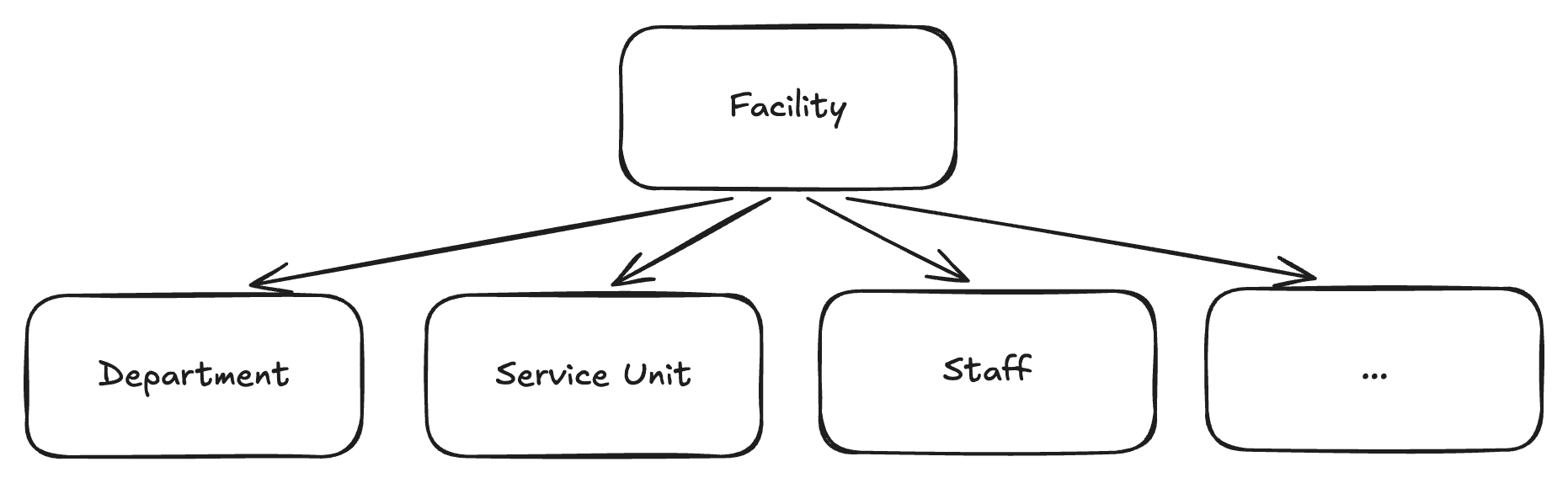 A facility represents the second-level tenant, encompassing operational and medical data. Data owned by a facility is categorized based on its scope:
Operation
Data related to the daily operations and workflows of a healthcare facility.
Queue management records, operational hours, unit/clinic schedules, and billing/cashier transactions.
Resource
Data representing physical, human, or logical assets owned and managed by the facility.
Doctors and medical staff directory, room and bed inventory, medical equipment, and local pharmacy stock.
Medical
Data directly related to clinical services and medical care provided at the facility level.
Outpatient/inpatient encounter notes, physical examination records, nursing notes, and local prescription orders.
Strategy
Authentication Data
Data related to authentication are managed by Better Auth framework.
Database Choice
CentriCare adopts MongoDB as its primary database for flexibility and familiarity.
Data Encryption
CentriCare uses Selective Field-Level E2EE for data encryption. Learn more about our encryption strategy.
Data Model
Although MongoDB offers schema flexibility, our architecture strictly follows industry-proven data modeling patterns:
- Polymorphic Pattern
- Attribute Pattern
- Bucket Pattern
- Computed Pattern
- Subset Pattern
- Extended Reference Pattern
- Tree Pattern
- Parent Reference
- Child Reference
- Materialized Path
- Schema Versioning Pattern
